Hamsa Hand of Fatima Diwali: A Designer's Review
When I first opened the Hamsa Hand of Fatima Diwali file on my screen, I wasn't just looking at lines and curves; I was visualizing the final texture against a specific fabric grain. As someone who spends hours hooping, threading, and trimming, my first impression is always about mood and potential application. This design immediately strikes a balance between spiritual symbolism and festive elegance. The layout feels organic yet structured, making it a versatile machine embroidery design that could easily transition from a personal holiday gift to a best-selling item in a boutique shop.
Visual Personality and First Impressions
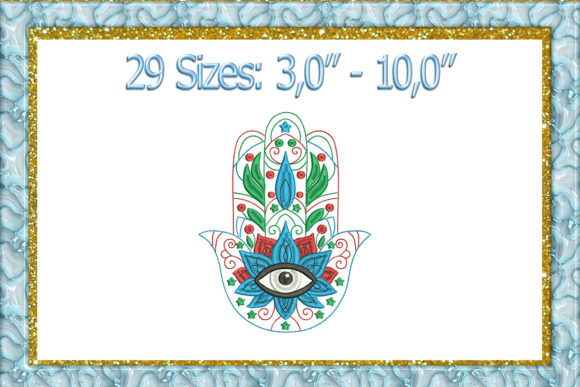
The aesthetic of the Hamsa Hand of Fatima Diwali leans heavily into celebration without being overly cluttered. In the world of Holidays and seasonal decor, designs often suffer from being too busy or relying on clichéd elements. However, this piece maintains a dignified silhouette. The shape suggests protection and blessing, which resonates deeply with customers looking for meaningful handmade products.
From a technical standpoint, the visual personality relies on a mix of stitch types. While I cannot confirm the exact stitch count without running a simulation, the preview suggests a thoughtful combination of satin stitch for the outlines and definition, likely paired with fill stitch areas to give the hand body and presence. There may also be delicate running stitch details that add texture without adding excessive bulk. This layering is crucial for creating depth, especially when the design is scaled down for smaller items like patches or up for large tote bags.
Real-World Application: The Holiday Tote Scenario
To truly evaluate an embroidery file, I have to imagine it in a real-life scenario. Let's say I am preparing a run of custom tote bags for a local craft fair during the festival season. The Hamsa Hand of Fatima Diwali fits perfectly here. Imagine stitching this onto a heavy canvas bag using a contrasting thread color—perhaps a deep gold or vibrant orange against a navy blue background.
In this context, the design acts as a focal point. It elevates a simple bag into a personalized gift or a statement piece of custom apparel. Customers at a market are drawn to items that tell a story, and the Hamsa hand carries centuries of cultural significance. When paired with the "Diwali" theme, it becomes a unique crossover item that appeals to those celebrating the festival of lights as well as anyone who appreciates bohemian or spiritual aesthetics. The finished product would feel substantial and high-value, justifying a higher price point for an Etsy seller or small shop owner.
Versatility Across Different Products
Beyond tote bags, this design shows promise across various substrates. For sweatshirt embroidery, the density appears manageable, meaning it shouldn't create a stiff, cardboard-like patch on a soft fleece garment. If you are running a craft business focused on baby items, this could work beautifully as a central motif on a muslin swaddle or a denim jacket, provided the stitch density is adjusted for sensitive skin.
For those creating embroidered patches, the defined edges of the Hamsa hand suggest it would digitize well for a merrowed edge finish. It could also serve as an excellent accent on pillow covers or tea towels, bringing a touch of holiday embroidery into home decor that lasts beyond the specific festival date. The key is recognizing that while the title mentions Diwali, the symbol itself is timeless, allowing you to market it as a year-round spiritual asset or a specific seasonal hit depending on your branding.
Technical Considerations and Fabric Challenges
Every designer knows that a beautiful screen preview does not guarantee a perfect stitch-out. There are specific areas where the Hamsa Hand of Fatima Diwali requires careful attention.
- Fabric Texture: On textured fabrics like terrycloth or heavy linen, fine details might get lost. I recommend testing the design on a scrap piece of your intended material first to see how the stitch density interacts with the weave.
- Stretchy Materials: If you plan to use this on a t-shirt or a knit cap, proper stabilization is non-negotiable. Without a cut-away stabilizer, the fill areas could pucker over time, distorting the sacred geometry of the hand.
- Dark Fabrics: The design's visibility on dark backgrounds depends entirely on your thread colors. You must ensure high contrast. A mockup in black and white can help you judge if the light values hold up before you commit to stitching.
- Small Hoop Sizes: If you are aiming for a pocket-sized logo, check the minimum hoop size requirements. Tiny corners and intricate internal details can become muddy if the design is resized too aggressively.
Additionally, curved surfaces like caps present a challenge for wide designs. The Hamsa hand has a certain width that might require careful positioning to avoid wrapping around the curve of a baseball cap too drastically. Always hoop your test fabric tightly and consider using a topper if stitching on pile fabrics or towels to prevent sinking stitches.
Enhancing Brand Value and Customer Trust
Using a high-quality design like the Hamsa Hand of Fatima Diwali directly impacts your brand consistency and customer trust. In the competitive landscape of commercial embroidery, sloppy stitch-outs lead to returns and negative reviews. A clean, well-defined design signals professionalism. When a customer receives a jacket or bag with crisp edges and no bird-nesting, they perceive the entire finished product as premium.
For digital product sellers offering printable mockups, this design offers strong visual appeal. The symmetry and cultural resonance make it highly "instagrammable," which drives buyer engagement. Whether you are selling the physical item or the digital embroidery file itself, the presentation matters. Ensuring the design looks good in both light and dark scenarios expands your potential market, allowing you to cater to diverse client requests.
Final Designer Notes and Best Practices
Before launching this design into production, there are a few practical steps every maker should take. First, always verify the included formats. The description notes that the Hamsa Hand of Fatima Diwali comes with multiple embroidery file formats, but you must confirm these match your specific machine brand (e.g., PES, DST, EXP).
Second, review the licensing terms. If you intend to sell finished goods on Etsy or at craft fairs, ensure the license permits commercial embroidery use. Some designers restrict the number of physical items you can sell, while others offer unlimited usage. Never assume; always read the fine print to protect your small shop product line.
Finally, treat every new file as a learning opportunity. Stitch a sample on scrap fabric, trim the jump stitches, and assess the underlay. Does the design lie flat? Are the thread transitions smooth? These small checks separate hobbyists from professional apparel decorators. The Hamsa Hand of Fatima Diwali has the potential to be a standout piece in your portfolio, bridging the gap between traditional symbolism and modern embroidery project trends. With the right preparation and attention to detail, it can become a staple in your holiday collection and a cherished item for your clients.