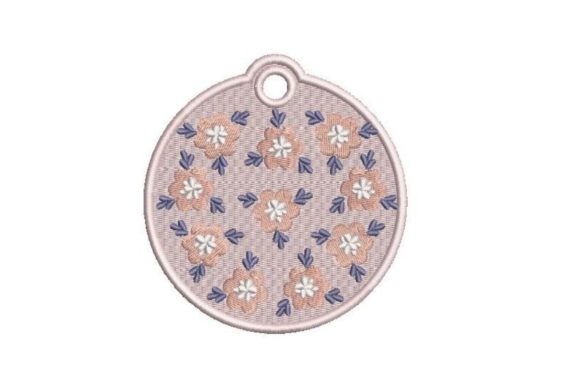
Round Keychain Background: A Pro Review for Small Business Merch
As an embroidery designer who has spent years digitizing and reviewing files for commercial use, I approach every new machine embroidery design with a critical eye. It is not just about whether it looks pretty on a screen; it is about how it performs under the needle when producing hundreds of units for a client. Today, I am reviewing the Round Keychain Background, a file categorized under House and Embroidery, to see if it holds up as a viable asset for small business merchandise, branded patches, and custom apparel.
My first impression of the Round Keychain Background is that it strikes a balance between professional utility and approachable charm. The description promises a "cheerful touch," and visually, the circular format suggests versatility. In the world of branding, circles often represent unity, community, and completeness. For a local café, a boutique florist, or a handmade craft studio, this shape serves as an excellent container for logos, monograms, or standalone decorative elements. It feels modern yet classic enough to avoid looking dated next season.
Real-World Application for Branded Merchandise
The true test of any digital embroidery file is its adaptability across different products. The Round Keychain Background shines here because of its neutral yet structured geometry. Imagine a local bakery wanting to upgrade their staff uniforms. Instead of a plain text logo on a chest pocket, using this round background as a patch on an apron creates a cohesive, high-end look. It frames the bakery's name perfectly, turning a standard apron embroidery job into a branded statement piece.
For Etsy sellers and creators of handmade product lines, this design is a goldmine for creating branded tags. Sewn onto the hem of a tote bag or the collar of a shirt, a small embroidered circle acts as a seal of quality. It tells the customer that attention was paid to the details. I can easily envision this being used for:
- Embroidered patches that customers can iron onto their own jackets, extending brand reach.
- Cap embroidery where a centered round design sits perfectly on the front panel without distortion.
- Tote bag design accents that replace cheap printed labels with durable stitching.
- Staff work shirts where the round element unifies a team wearing different colored polos.
- Customer gifts, such as branded coasters or keychains, leveraging the design's intended shape.
In terms of brand identity, consistency is key. Using the same round motif across hats, bags, and uniforms helps build visual recognition. When a customer sees that specific circular stitch pattern, they should immediately think of your business. This design supports that goal by providing a clean, defined space that draws the eye.
Technical Performance and Stitch Quality
The product description notes that this is a "very well digitized design and easy to embroider." From a technical standpoint, this is music to a producer's ears. "Easy to embroider" usually implies that the digitizer has managed the stitch density effectively, preventing the fabric from puckering or the thread from breaking during long runs. For commercial embroidery shops running multi-head machines, a file that minimizes trim jumps and optimizes travel stitches saves significant time and money.
However, "easy" is relative to the material. When working with textured fabrics like heavy canvas totes or thick twill caps, even a well-digitized file needs careful setup. The round shape means there are no sharp corners to hide registration errors, so your hoop alignment must be precise. If you are placing this on a curved surface like a cap, ensure your framing technique accounts for the push-and-pull of the stitches to maintain the perfect circle.
One area to watch is the edge definition. Round designs can sometimes suffer from "scalloping" if the satin stitch columns are too wide or if the underlay is insufficient. Before committing to a large order of custom apparel, I strongly advise running a test on the actual fabric you intend to use. Check if the edges remain crisp or if they bleed into the material.
Strategic Considerations for Business Use
While the Round Keychain Background is versatile, there are scenarios where caution is required. If you plan to use this as a very small patch, perhaps under two inches in diameter, you must verify that the internal details do not become muddy. High stitch density in a small area can create a stiff, cardboard-like feel that customers might find uncomfortable on wearables.
Color contrast is another vital factor. The description mentions it adds a "cheerful touch," which often implies bright or varied thread colors. On dark uniforms, ensure you have enough light-colored underlay or a border to make the design pop. Conversely, on white aprons, avoid using thread colors that are too similar to the fabric unless you are going for a subtle, tone-on-tone luxury effect.
Furthermore, consider the washing requirements of the finished product. Items like aprons and work shirts undergo frequent laundering. A round design with dense fill stitches may shrink slightly differently than the surrounding fabric over time. Using the correct stabilizer is non-negotiable here. For stretchy fabrics like performance tees, a cut-away stabilizer is essential to prevent the circle from distorting into an oval after the first wash.
Designer Notes for Implementation
To get the most out of the Round Keychain Background, follow these practical steps before launching your production run:
- Test in Black and White First: Remove color variables to check the structural integrity of the stitching and the clarity of the shape.
- Verify Hoop Size: Although the file comes in multiple formats, confirm that your specific machine's hoop size accommodates the largest version of the design without re-hooping.
- Create a Printable Mockup: Before stitching a single thread, place the design digitally on a photo of your product. This helps clients visualize the brand identity impact and approve the placement.
- Check Commercial Licensing: The description states it "can be used w," likely implying commercial use, but always read the full license terms. Ensure you are cleared to sell items made with this embroidery file.
- Compare Design Assets: Place this round background beside your existing logo files. Does it complement them, or does it clash? Visual consistency builds trust.
- Fabric Texture Test: Stitch a sample on the exact fabric texture you will be selling. A design that looks great on cotton might sink into loose-weave linen.
In conclusion, the Round Keychain Background appears to be a solid addition to any embroidery shop's library of design assets. Its strength lies in its simplicity and its ability to frame other branding elements while standing alone as a cheerful, professional mark. For small business owners looking to elevate their merchandise from generic to branded, this file offers a reliable foundation. Just remember that the quality of the final output depends as much on your setup, stabilizer choice, and fabric selection as it does on the digitization itself. With proper testing, this design can become a staple in your catalog of profitable, high-quality embroidered goods.