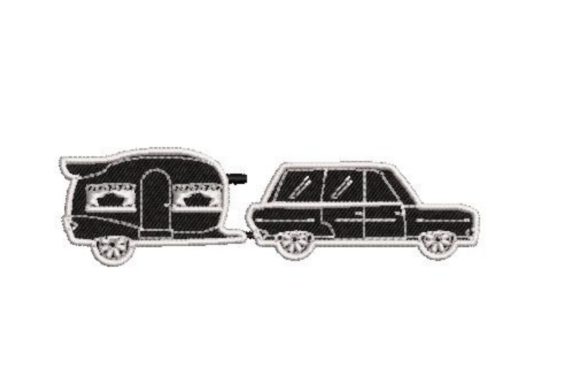
Vintage Camping Trailer Being Towed: A Designer's Review
There is a specific kind of nostalgia that hits when you see a classic travel trailer rolling down a country road. It evokes memories of simpler times, family road trips, and the great outdoors. As an embroidery designer who spends half my life staring at digitized files on a screen and the other half troubleshooting thread breaks on the machine, I am always skeptical of "scene" designs. Often, they look beautiful as a JPEG but turn into a tangled mess of underlay and jump stitches once they hit the fabric. However, after spending some time analyzing the Vintage Camping Trailer Being Towed design, I found myself genuinely excited to pull out the hoop.
This isn't just a generic icon; it is a piece of art that fits perfectly within the Transportation category while offering the charm required for high-end home decor or boutique apparel. In this review, I am breaking down how this machine embroidery design performs in real-world scenarios, where it shines, and where you need to exercise caution before committing to a client project.
The First Impression: Mood and Visual Personality
When I first loaded the preview of the Vintage Camping Trailer Being Towed, the immediate takeaway was its balance. Many vintage designs suffer from being either too simplistic, lacking character, or too dense, resulting in a stiff, cardboard-like finish. This design strikes a sweet spot. The lines are clean, suggesting a thoughtful mix of satin stitch for the outlines and fill stitch for the body of the trailer.
The layout feels dynamic because of the towing element. It implies motion, which adds life to what could otherwise be a static image. For a designer, this means the finished product will have visual flow. Whether you are stitching this onto a crisp white tote bag or a heather grey sweatshirt, the composition holds up. It creates a mood of adventure and comfort, making it an ideal candidate for customers looking for that "glamping" aesthetic without the modern tech overload.
Real-World Application: From Mockup to Finished Product
Let's talk about where this design actually belongs. I recently simulated a project for a local boutique that specializes in outdoor-themed gifts. They needed a centerpiece for their new line of canvas market totes. The Vintage Camping Trailer Being Towed was the obvious choice. Because the design has a defined shape with clear boundaries, it works exceptionally well as a central focal point on a tote bag design.
Beyond bags, I can see this thriving as sweatshirt embroidery. Imagine a crewneck in olive green or mustard yellow with this design stitched on the left chest or centered on the back. The vintage color palette usually associated with these trailers—creams, teals, and rusty reds—pops beautifully against earth tones. It also translates well to embroidered patch projects. If you are running a small shop product line, creating iron-on or sew-on patches with this motif could be a lucrative addition to your inventory.
For those targeting the nursery market, this design serves as excellent baby embroidery. A simple onesie or a burp cloth featuring a tiny version of the trailer tells a story of future family adventures. It moves beyond generic "baby boy" or "baby girl" themes into something with personality. Furthermore, for Etsy sellers looking to expand their design assets, this file offers versatility. It can be used for holiday embroidery (think summer vacation gifts), wedding gifts for couples who love travel, or even personalized aprons for the BBQ enthusiast.
Technical Considerations and Fabric Compatibility
While the aesthetic appeal is high, we must discuss the technical execution. Not every fabric plays nice with every embroidery file. The Vintage Camping Trailer Being Towed contains details that require attention regarding stitch density. If you are planning to stitch this on a textured fabric like a waffle weave towel or a thick terrycloth robe, you need to be careful. High texture can obscure fine details, and if the density is too high, the fabric may pucker.
I strongly advise testing this design on scrap fabric first. Specifically, check how it behaves on stretchy materials. If you are doing custom apparel like a fitted t-shirt, the pull of the stitches during washing could distort the trailer's shape if the stabilizer isn't adequate. For curved surfaces, such as caps or hats, ensure the hoop size you select accommodates the width of the trailer and the tow vehicle without cramming the edges. A cramped design on a curved visor often leads to registration issues where the colors don't meet cleanly.
Dark fabrics present another challenge. Since this is a scene-based design, it likely relies on light thread colors for the trailer body. On a black hoodie, you might need to adjust the underlay or add a backing layer to prevent the dark fabric from showing through the lighter stitches. Always compare light and dark fabric backgrounds before finalizing a production run.
Practical Notes for the Professional Embroiderer
To ensure your finished product looks professional and maintains customer trust, keep these practical tips in mind:
- Stabilizer Selection: Do not skimp here. For garments that will be washed frequently, like t-shirts or baby clothes, use a high-quality cut-away stabilizer to maintain the integrity of the design over time.
- Thread Contrast: Review the suggested thread colors. While the default palette is likely charming, don't be afraid to customize it to match your brand's specific colorway, provided the contrast remains high enough for clarity.
- Small Details: Inspect the tiny elements, such as the wheels or window frames. On smaller hoop sizes, these details might merge. You may need to simplify the design or increase the size slightly for smaller applications.
- Licensing Check: Before selling this as a commercial embroidery item or including it in a digital bundle, confirm the licensing terms. The description notes it comes with multiple formats and can be used for various purposes, but always verify if there are restrictions on the number of physical items you can sell.
- Mockups: Test the design in black and white mockups first. This helps you see the structure and density without the distraction of color, ensuring the running stitch outlines and fill areas are balanced.
Final Verdict: Is It Worth the Stitch?
In the world of Embroidery, a design is only as good as its execution on the final medium. The Vintage Camping Trailer Being Towed stands out as a robust, versatile asset for creative entrepreneurs. It bridges the gap between hobbyist charm and commercial viability. Whether you are creating a personalized gift for a friend who just bought an RV or stocking shelves for your craft business, this design delivers on visual appeal and stitching clarity.
It encourages buyer engagement because it tells a story. Customers don't just buy a stitched image; they buy the feeling of the open road. Just remember to respect the technical limitations of your materials. Check your hoop size, choose the right stabilizer, and always do a test run. With the right preparation, this design can become a staple in your portfolio, adding value to your handmade products and enhancing your brand's reputation for quality. It is a reminder that sometimes, the best designs are the ones that take us back to where we started, one stitch at a time.