Pendulum Board: A Pro Review for Halloween Merch
As an embroidery designer who spends most of my days digitizing logos and testing files for small business clients, I approach every new machine embroidery design with a critical eye. It is not just about whether the image looks cute on a screen; it is about how that digital embroidery file translates into a tangible finished product that builds brand value. Recently, I took a close look at the Pendulum Board design to evaluate its potential for seasonal merchandise. With Halloween approaching, businesses are scrambling for unique ways to engage customers, and this design promises to "catch the eye." But does it hold up under the scrutiny of commercial production?
First Impressions: Visual Personality and Brand Fit
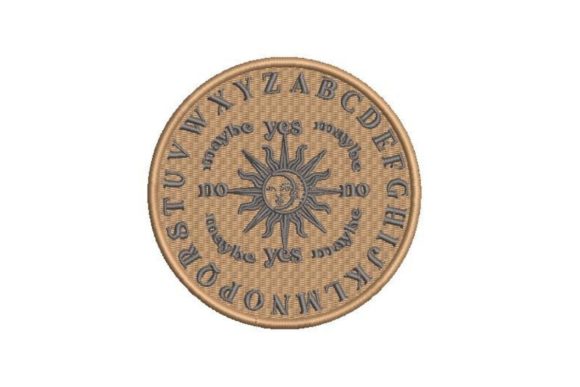
The first thing that strikes me about the Pendulum Board is its inherent thematic strength. The title alone suggests movement, mystery, and a touch of vintage occultism, which fits perfectly within the Halloween category. For a boutique, a creative studio, or a local café looking to dip their toes into seasonal branding without going overboard, this design offers a playful yet slightly eerie aesthetic. It feels less like a generic spooky graphic and more like a curated asset that could belong to a handmade brand.
In terms of visual personality, the design leans towards the decorative and bold. When reviewing the description, which highlights its ability to grab attention, I interpret this as a design with strong outlines and likely distinct color blocking. For brand identity, this is crucial. A muddy or overly complex design gets lost on a uniform, but a bold graphic like the Pendulum Board can serve as an instant recognition marker. Whether placed on a tote bag or a staff apron, it communicates a specific vibe: fun, seasonal, and professionally curated.
Real-World Application for Small Business Merch
Let's move beyond theory and discuss where this embroidery file actually shines in a commercial setting. Imagine a local bakery wanting to sell limited-edition small business merch for October. The Pendulum Board could be the centerpiece of an embroidered patch sewn onto canvas tote bags. Patches are excellent because they allow the business to produce the base bag in bulk and simply attach the seasonal design later, reducing inventory risk.
For service-based businesses, such as a pet grooming salon or a florist, apron embroidery is a fantastic use case. Staff wearing aprons featuring the Pendulum Board create a unified, festive front-of-house appearance that delights customers without sacrificing professionalism. Similarly, for cap embroidery, this design could work well on the side panel or as a smaller accent on the front, provided the stitch count allows for the curve of the hat. It transforms standard workwear into custom apparel that employees might actually want to wear after the shift ends.
I also see potential for this design in event merch. If a craft fair or a local market is hosting a Halloween-themed weekend, vendors can use the Pendulum Board on product packaging accents or as a free gift with purchase. It adds perceived value to the transaction. For Etsy sellers, incorporating this into a printable mockup alongside other design assets can help visualize how it looks on dark versus light fabrics, aiding in faster sales conversions.
Technical Considerations and Production Challenges
While the artistic merit is clear, a professional review must address the technical realities of commercial embroidery. The description notes that the design comes in multiple formats, which is a good start, but there are specific areas where caution is required. First, we must consider stitch density. Halloween designs often rely on heavy fill stitches to create solid blocks of color like orange, black, and purple. If the density is too high, the design may become stiff and uncomfortable on wearable items like t-shirts or lightweight aprons.
Placement is another critical factor. On curved surfaces like cap fronts, detailed outlines can pucker if the stabilizer isn't chosen correctly. I always advise testing the Pendulum Board on the actual fabric texture you intend to use. A design that looks crisp on twill might lose definition on a fuzzy fleece or a textured canvas. Furthermore, if the design includes any lettering or fine details within the pendulum motif, these need to be checked at small sizes. Tiny elements often disappear or merge when scaled down for a pocket logo or a small patch.
Color contrast is vital for visibility. Since this is a Halloween design, it likely utilizes dark threads. If you are embroidering this on dark uniforms, you must ensure there is enough underlay or a light-colored border to make the Pendulum Board pop. Otherwise, the design will vanish into the garment, failing its primary purpose of catching the eye.
Impact on Brand Identity and Customer Trust
Using a high-quality, thematic design like the Pendulum Board does more than just decorate a product; it reinforces brand identity. When a customer sees a cohesive, well-executed embroidered logo on a tote bag or a barista's apron, it signals professionalism. It tells them that the business cares about details. In the world of handmade product sales, this attention to detail builds trust. It elevates the item from a simple commodity to a collectible piece of small business merch.
Consistency is key. If you use the Pendulum Board across various touchpoints—social media graphics, physical patches, and staff uniforms—it creates a visual language that customers recognize. This recognition drives engagement. A customer is more likely to photograph and share an Instagram story of a beautifully embroidered tote bag than a plain one, providing free marketing for your brand.
Designer Notes for Successful Implementation
Before you commit to a large production run, here are my practical recommendations for working with this file:
- Test in Black and White First: Convert the design to a single color in your software to check the integrity of the shapes and spacing without the distraction of thread colors.
- Verify Hoop Size: The description mentions multiple formats, but always confirm the specific hoop size required for your machine to avoid last-minute resizing issues that can distort the image.
- Check Commercial Licensing: Ensure the license terms explicitly allow for use on items for sale. Some files are for personal use only, which would be a legal risk for commercial embroidery projects.
- Create a Mockup: Before stitching, create a printable mockup to show your client or team exactly how the Pendulum Board will look on the specific garment color.
- Stabilizer Selection: Match your stabilizer to the fabric weight. Heavier cuts may require a cut-away stabilizer to prevent stretching over time, especially for items that will be washed frequently.
- Thread Contrast: Experiment with metallic or variegated thread colors to add a premium feel to the pendulum effect, making it stand out against standard cotton threads.
In conclusion, the Pendulum Board is a versatile asset for any embroidery professional looking to expand their Halloween offerings. While it requires careful attention to technical details like density and placement, its potential to enhance brand identity and create memorable custom apparel is significant. By treating it as a strategic business tool rather than just a decoration, small business owners can leverage this design to drive sales and deepen customer connections this season.